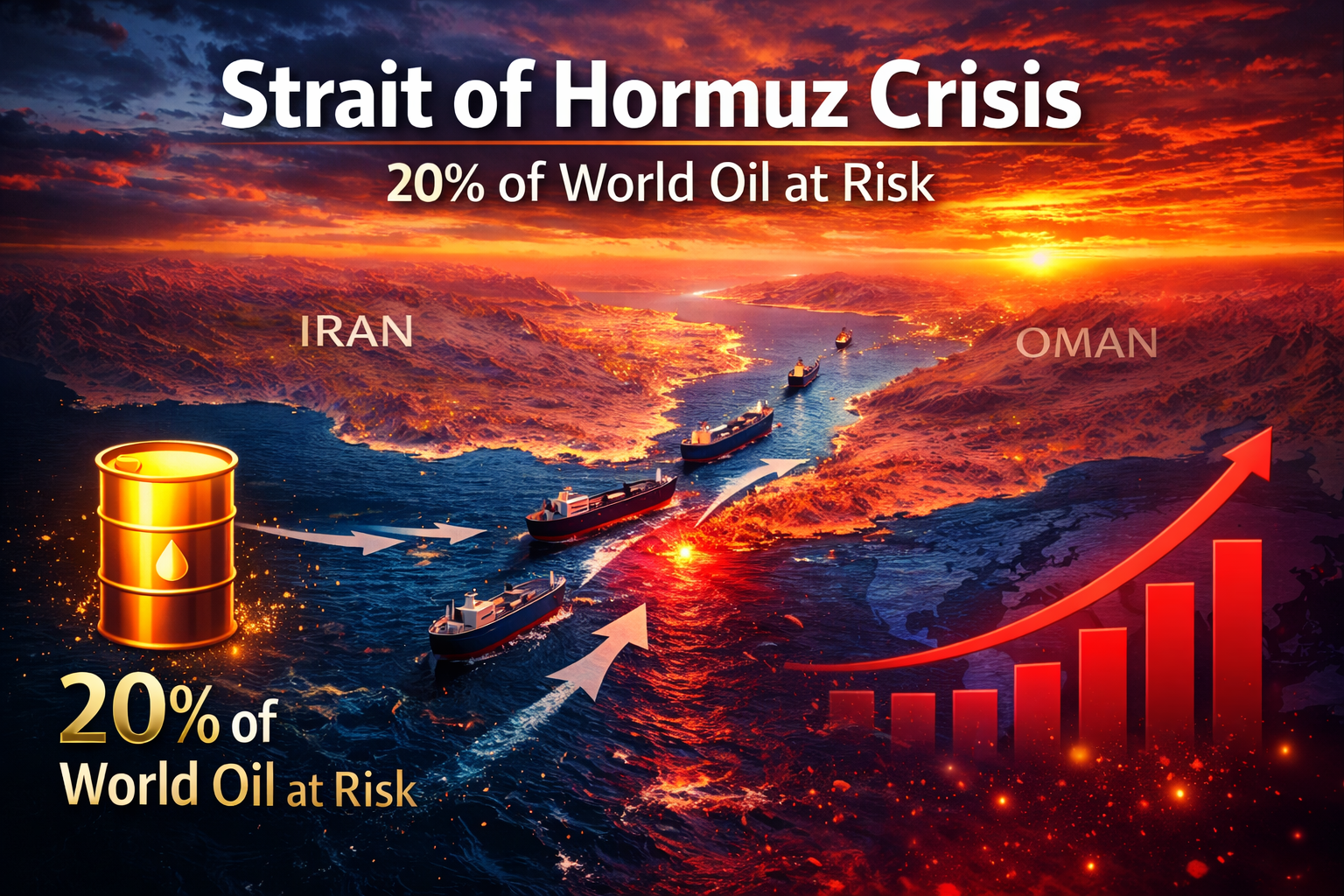
The Strait of Hormuz is one of the most important waterways in the world. It is a narrow sea passage between Iran and Oman that connects the Persian Gulf to the Gulf of Oman and the Arabian Sea.
Even though it is narrow, it plays a massive role in global energy supply.
Around 20% of the world’s crude oil and a large share of liquefied natural gas (LNG) pass through this route every single day. That is why any tension here immediately affects oil prices, stock markets, and global economies.
Why Is the Strait of Hormuz So Important?
Think of it as the main highway for oil exports from the Middle East.
Major oil-producing countries like Saudi Arabia, Iraq, UAE, Kuwait, and Iran ship their oil through this route. If ships cannot pass, oil supply reduces globally. When supply drops and demand stays high, prices go up.
That is basic economics.
Because of this, the Strait of Hormuz is considered the most critical oil chokepoint in the world.
Why Would Iran Block the Strait of Hormuz?
Iran has, in the past, threatened to block the Strait during periods of military tension or sanctions.
The main reasons usually include:
- Response to military attacks
- Reaction to economic sanctions
- Strategic pressure against Western countries
If Iran faces military strikes or heavy sanctions, blocking or threatening to block the Strait becomes a powerful pressure tool. It sends a message to the global market: if Iran is hurt, global oil flow can also be disrupted.
However, completely closing the Strait is extremely difficult and risky. It could trigger international military response and harm Iran’s own oil exports as well.
What Happens If the Strait of Hormuz Is Closed?
If the Strait is blocked even temporarily, the impact can be serious.
1. Oil Prices Surge Globally
Oil prices can spike sharply. Experts often estimate that prices could jump above $120–$150 per barrel during a major disruption. Higher crude oil means higher petrol and diesel prices worldwide.
2. Petrol and Diesel Become Expensive
When crude oil becomes costly, fuel prices rise in countries like India, the US, and across Europe. Transport costs increase. Food and goods become more expensive.
Inflation rises.
3. Stock Markets Become Volatile
Energy-sensitive sectors such as airlines, logistics, and manufacturing get affected. Markets may fall due to uncertainty and rising costs.
4. Impact on India
India imports a large portion of its crude oil from the Middle East. If shipping is disrupted, India may face:
- Higher import bills
- Rupee pressure
- Increased inflation
- Fiscal stress
This is why developments in the Strait of Hormuz directly matter to Indian consumers.
Can the World Bypass the Strait of Hormuz?
Some alternative pipelines exist in Saudi Arabia and the UAE that reduce dependency on the Strait. But these routes cannot fully replace the massive daily oil flow that moves through Hormuz.
So, while alternatives help slightly, the Strait remains irreplaceable in the short term.
Is a Complete Closure Likely?
A full and long-term shutdown is unlikely because:
- It would hurt Iran’s own economy.
- It could lead to international military escalation.
- Global powers closely monitor the region.
Most tensions result in temporary disruptions or threats rather than permanent closure.
Final Thoughts
The Strait of Hormuz is not just a narrow waterway — it is the backbone of global energy trade.
If Iran blocks it, even for a short time, oil prices can surge, inflation can rise, and economies around the world can feel the shock.
For countries like India that depend heavily on oil imports, the Strait of Hormuz is not just a geopolitical issue. It directly affects petrol prices, transport costs, and daily living expenses.
That is why every headline about the Strait of Hormuz immediately moves global markets.
Understanding this single water route helps you understand why Middle East tensions can impact fuel prices at your local petrol pump.